

日本化学機械製造株式会社は、化学機器を自社工場にて製造できるプラントエンジニアリング企業です。
自社工場は、高圧ガス設備、圧力容器、また特殊材(耐食材料)の製作も可能で、材料手配から納入まで一括管理を行っています。プラントは様々な装置、機器類の組み合わせで構成されており、エンジニアリングには多くの知識と経験が必要とされます。
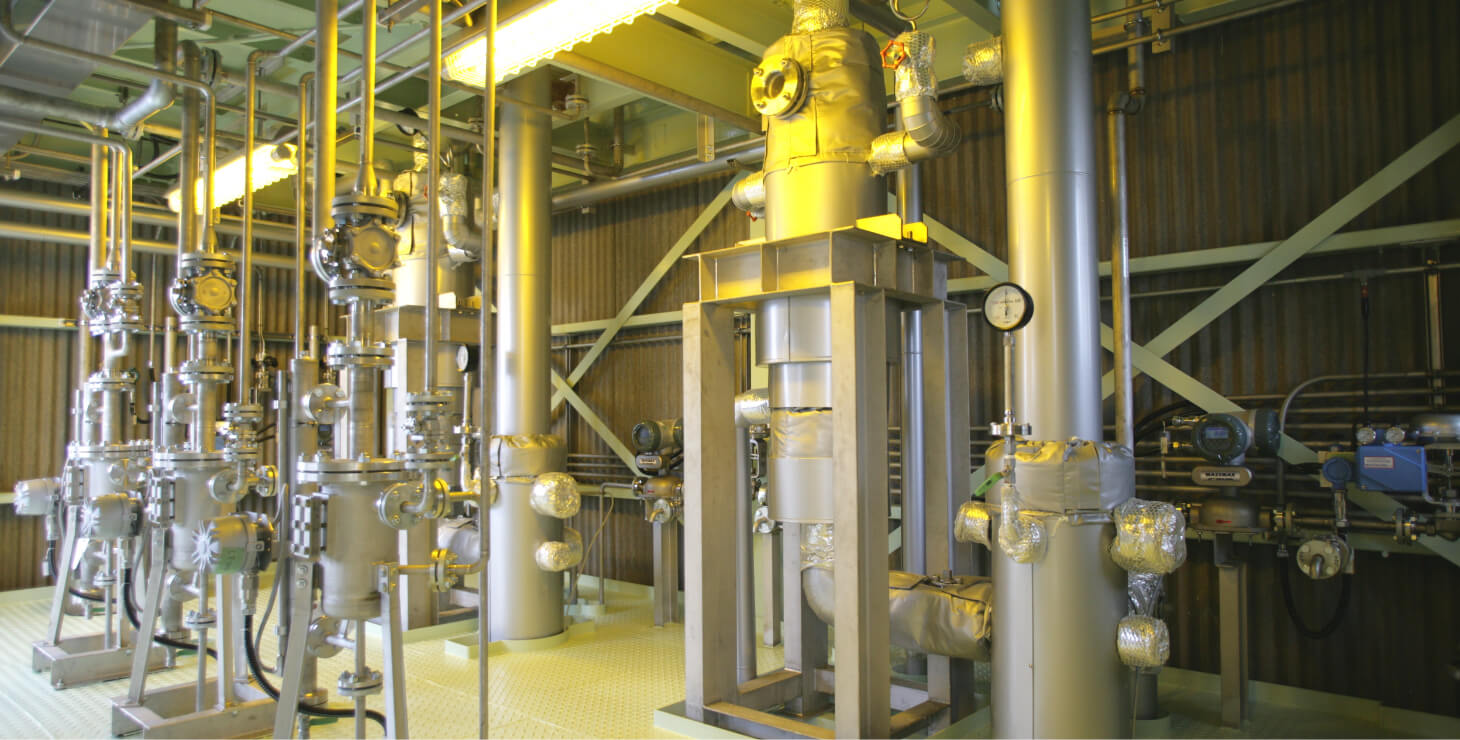
また、時代背景?外部環境の変化に伴いプラントに対するお客様のニーズも多種多様に変化しています。 設備の抱える様々な問題の解決、省エネルギー、環境対策、生産効率、品質向上、新製品生産のプロセス構築?設備計画の具現化によりお客様の事業価値向上の一助となるべく、最新の技術の開発、活用に努めております。 常にお客様の立場になり、安全で効率的な設備の構築を念頭に取り組んでおります。
-
THREE:But whilst England had been thus preparing for the augmentation of the navy, America had been aiming a blow at the efficiency of that navy, which must for years, if successful, have prostrated our whole maritime forces, and exposed our shores to the easiest invasion. This intended blow was nothing less than the destruction of our great naval dockyards and arsenals, and military storehouses, at Portsmouth and Plymouth. The chief agent in this infamous design, if the evidence of a miscreant can be believed, was Silas Deane. On the 7th of December the rope-house of the Royal Dockyard at Portsmouth was found to be on fire. By active exertions it was got under, after it had destroyed that building, and was imagined to be an accident. But on the 15th of January, 1777, one of the officers of the dockyard found a machine and combustibles concealed in the hemp in the hemp-house of the same dockyard. Suspicion now fell on a moody, silent artisan, who, on the day of the fire, had been looking about the dockyard, and who, by some chance, had got locked up in the rope-house the night before. His name was not known, but the[234] fact only that he was a painter, and had been called John the Painter. Government immediately offered a reward of fifty pounds for his apprehension; the same sum, with a strange simplicity, being offered to him if he would surrender himself for examination. Nothing, however, could be learned of him in Portsmouth or the country round; but fresh fires were now breaking out at Plymouth Dockyard and on the quays of Bristol. At Plymouth the fire was instantly checked, and the perpetrator was nearly seized. At Bristol the fire was laid near a narrow, deep creek, crowded with shipping, which was nearly dry at low water, so that it was impossible to get the shipping out. Six or seven warehouses were destroyed, but the shipping escaped. In another house at Bristol combustibles were discovered, and the alarm became general that the American incendiaries, having failed to burn New York, were come to England to burn our dockyards and maritime houses. Fortunately, in the beginning of February, a man was apprehended for the perpetration of a burglary at Odiham, in Hampshire; and, by the activity of Sir John Fielding, the London magistrate, he was identified as John the Painter. When brought before Sir John and other magistrates in town, the man conducted himself with tact and address. Though closely examined and cross-questioned by some of the members of the Privy Council, by Lords of the Admiralty, and other officers of the board, he maintained the scrutiny without betraying any embarrassment, or letting anything escape him that could in any degree incriminate him. A confession was, however, wormed out of him by another painter, named Baldwin. Silas Deane, John the Painter declared, according to Baldwin's evidence, had encouraged him to set fire to the dockyards of Plymouth and Portsmouth, Woolwich and Chatham, as the most effectual means of disabling Great Britain; that he gave him bills to the amount of three hundred pounds on a merchant in London, and promised to reward him according to the amount of service he should do to the American cause. Before his execution he freely admitted the truth of the charges against him. He confessed to having twice attempted to fire the dockyard at Plymouth, and to burning the warehouses at Bristol, having in vain endeavoured to deposit his combustibles on board the ships. He, moreover, stated that he had a recommendation from Silas Deane to Dr. Bancroft, in London, to whom he had declared that he would do all the harm he could to England; that the doctor did not approve of his conduct, but had, at his request, promised not to betray him.
経験と実績をもとに、お客様のニーズに応じた最適な仕様?システムを構築、ご提案いたします。
-
THREE:
工場建屋、事務所棟、倉庫、試験棟などの建設も一括してご依頼いただけます。
-
THREE:
環境に配慮し、コストメリットを勘案した、省エネルギーで、省スペースな設備をご提案いたします。
-
THREE:The new spring in poetry broke forth as brilliantly in this reign as that in prose. In the earlier portion of it, indeed, this was not so visible. The school of Pope seemed still to retain its influence. This school had produced a host of imitators, but little real genius since Pope's time. Almost the only exception to this mediocrity was Collins, whose odes were full of fire and genius. He died just before this period, and Gray,[182] Shenstone, and Goldsmith opened it with many of the exterior characteristics of that school. But, in truth, notwithstanding the mere fashion of their compositions, there were in them unmistakable evidences of new life. Shenstone was the least vigorous and original of the three, but his "Schoolmistress" possessed a natural charm that still gains it admirers. He belongs, however, rather to the past period than this, for he died but three years after the accession of George III., and had ceased to write some time before. Gray's "Elegy in a Country Churchyard" showed that he had deep feeling and a nice observation of nature; and his "Long Story" that he possessed real humour¡ªa quality abounding in his prose, but, except in this piece, little visible in his poetry. His odes are extremely vigorous, but somewhat formal. His "Bard," his "Ode on Eton College," and his "Fatal Sisters," are all full of beauty, but somewhat stilted. In the "Fatal Sisters" he introduced a subject from the "Scandinavian Edda" to the English reader, but in a most un-Scandinavian dress.The triumph of the mob had consummated the triumph of Jacobinism. The Republic was at length established, but not to the benefit of the Girondists. The ruin of royalty, for which they had so zealously laboured, was in reality their own ruin. The Jacobins, and at their head the sanguinary Robespierre, were left without a rival, except in that mob by which they worked, and which was destined to destroy them too. Danton appeared before the Assembly on the morning of the 10th, at the head of a deputation of the Commune, to state what had been done, and said plainly, "The people who send us to you have charged us to declare that they think you worthy of their confidence, but that they recognise no other judge of the extraordinary measures to which necessity has forced them to recur than the French nation¡ªour sovereign and yours¡ªconvoked in primary Assemblies." This was announcing without disguise that the Clubs were the supreme authorities. The Assembly felt its weakness and professed to approve of everything. Next, the new Ministers were chosen; Roland, as Minister of the Interior; Servan, as War Minister; and Clavi¨¨re as Minister of Finance. But to these were added Danton as Minister of Justice, Mong¨¦ as Minister of the Marine, and Le Brun as Minister of Foreign Affairs. They were to receive instructions, not from Louis, but from the Assembly. And now came into full light the mortal antagonism of the Assembly and the Clubs, and the real ascendency of the latter. The Assembly voted for the education of the Dauphin; the Clubs called for the utter removal of royalty. The Assembly recommended an active campaign against Foreign Powers, but mercy to the vanquished; the Clubs called for instant and universal vengeance on all supporters of royalty, who, they said, had intended to massacre the people and bring in the Prussians. They declared that there was no need of electoral bodies to form a new Assembly, but that every man, and some said every woman, was entitled to vote; and they insisted that the people ought to come in arms to manifest their wishes to the legislative body. This was plainly-avowed mob rule. Marat argued loudly for this and for purging France, as he called it, by cutting off every man, woman, and child that was not for mob rule; and Robespierre demanded the removal of the Assembly as effete and the summoning of a Convention. His advice was adopted, and the National Democratic Convention was convoked for the 21st of September. In the interval the Royalists were murdered in the prisons, and the Revolutionary Commune established at Paris. News of the most alarming character arrived from the frontier, Lafayette had gone over to the enemy, and the Prussians had taken Longwy.
高圧ガス設備、圧力容器の製造資格を持った自社工場での製作により、品質、納期を管理しております。
-
THREE:
コストを積算し、見積価格をご提示します。回収期間法などの設備投資の経済性計算をお客様とご一緒にシミュレーションすることも可能です。
-
THREE:On the motion for taking this Bill into further consideration, on the 8th of April, Mr. Hussey presented various petitions from merchants regarding the measure, and moved that the Bill required recommittal. He was seconded by Fox, who now, though approving of the main principles of the Bill, took occasion to contend for the development of the advanced doctrines of political liberty inculcated by the French revolutionists, and to urge the insertion of clauses in the Bill, in accordance with them. When the day for the debate on the Bill arrived, Fox called on Burke, though he had not done so for some time, and, in the presence of a common friend, entered into explanations which appeared satisfactory. Fox then proposed that the answer of Burke should not take place on the discussion of the Quebec Bill, though this was the Bill on which this topic had been introduced. Burke refused to comply; but the two old friends walked to the House together, displaying the last show of friendship which was to take place between them. Accordingly, on the 6th of May, when the chairman of the Committee put the question, that the Quebec Bill be read paragraph by paragraph, Burke rose, and determined to have a fair hearing on the question of the French Revolution, and proceeded to inveigh strongly against it. Then there were loud cries of "Order!" and "Question!" and Mr. Baker declared that the argument of Mr. Burke was calculated to involve the House in unnecessary altercation, and perhaps with the Government of another nation. Fox said his right honourable friend could scarcely be said to be out of order, for it seemed to be a day of privilege, when any gentleman might stand up and take any topic, and abuse any Government, whether it had reference to the point in question or not; that not a word had been said of the French Revolution, yet he had risen and abused it. He might just as well have abused that of China or Hindostan. This taunt came with ill grace from Fox, who had himself introduced this extraneous topic into the debates on this very Bill, and seized that occasion to attack Burke's opinions in his absence.
化学工場への納入実績が多く、各種法規にも精通しています。官庁申請書類の作成もサポートいたします。
-
THREE:Hastings embarked on the 8th of February, 1785, and arrived in England in June, 1786. He had sent home before him his wife, whose health had begun to suffer from the climate of India, and she had been most graciously received by King George and Queen Charlotte. He had been accompanied to his ship, on leaving Calcutta, by all the authorities, and by all people of distinction; he had received the most enthusiastic addresses of regret and of admiration as the saviour of India. In London, not only at Court, but in Leadenhall Street, he met with the same gratifying honour. He spent the autumn at Cheltenham with his wife, where he was courted and f¨ºted in a manner to warrant his writing to a friend, "I find myself everywhere and universally treated with evidences, apparent even to my own observation, that I possess the good opinion of my country." He was busy trying to purchase Daylesford, the, old family estate, and anticipating a peerage.
社内に様々なテスト装置をそろえておりますので、事前の検証も可能です。
新製品の生産プロセスの構築もご相談ください。
プラントの計画時から、設計、調達、建設、試運転、更には完成後のメンテナンスに至るまでトータルに対応いたします。当社は機器製作工場を所有しておりますので、細やかな機器設計?製作が可能です。
-
 FORE:
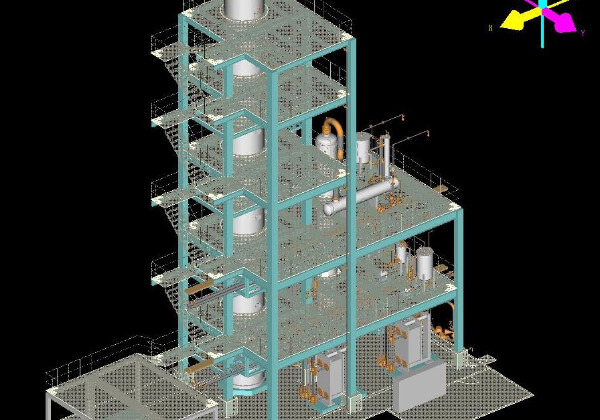
FORE:工場建設、プラント新設の計画の立案には、大きな労力を要します。当社では、お客様の一助となるべく、官庁届け出の助成を行いながら、工場建設を進め、抱えておられる問題の解決に取り組んでおります。
-
 FORE:
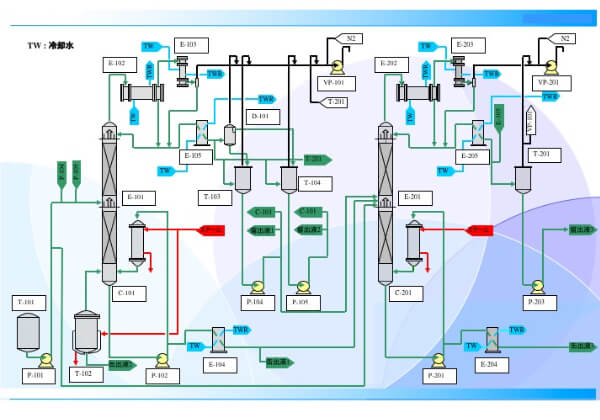
FORE:主要機器等の仕様を決定し、プラントの基本フローや配置を決定します。
-
 FORE:
FORE:設備の構成要素の詳細な仕様や配置を決定し、図面を作成します。
-
 FORE:The Swiss acted a more cautious part. Fearful that Napoleon might yet, by some other wonderful chance, regain his power, they summoned a Diet, passed an order for the neutrality of the cantons, and issued an order calling on the Allies to respect this, and not attempt to march troops through their country. This would have suited Buonaparte extremely well, as it would have closed his eastern frontiers to the Austrians, who were marching that way under Count Bubna; but the Austrians informed the Swiss authorities that they should certainly march through; and the Allied sovereigns dispatched Count Capo d'Istria and Herr Lebzeltern to Zurich to state that the power of France over Switzerland was at an end, and to desire them to send deputies to meet them, and to establish an independent government for Switzerland. Thus assured, the greater part of the cantons sent their deputies to Zurich, who proclaimed the restoration of national independence, and gave free consent for the armies of the Allies to march through the country.
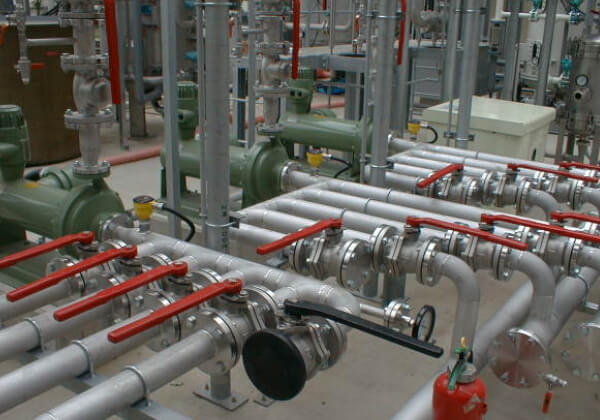
詳細設計に基づきポンプや部品類の購入品の調達先を選定し、発注します。
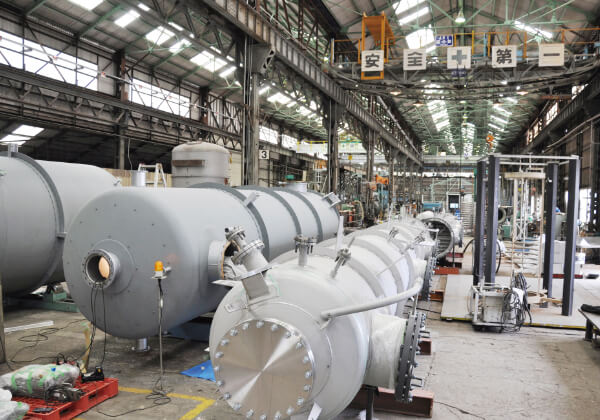
プラントを構成する主要な機器は特注製作が多く、材料発注、製作、各種検査、運搬まで工程、納期を管理します。 -
 FORE:This was sufficient warning to Cabinets not to meddle with this tabooed subject; but Grattan continued, year after year, to bring the question forward, though often defeated by great majorities. In his speech in 1808 Grattan introduced the idea of giving his Majesty a veto on the appointment of Catholic bishops. It appears that this proposition had the approval of the Irish Catholic bishops, but the Irish priests made a determined stand against it. In 1810 and 1811 the motion was thrown out by strong majorities.These unfortunate affairs precipitated the resignation of Lord George Germaine. His proud and impetuous temper had occasioned the resignation already of Sir Guy Carleton and of the two Howes. All complained that they could not obtain the necessary reinforcements and supplies from him as the Colonial Minister; and his tart and insolent replies to their complaints produced the retirement of these three commanders. He was already charged with having been the luckless projector of Burgoyne's disastrous expedition. Sir Henry Clinton was named the successor to the command of the forces in America, in the place of Sir William Howe. The punishment of North for the policy which had thus virtually lost America, was every day falling more crushingly upon him. On the 13th of March the Marquis de Noailles, the French Ambassador in London, and the uncle of Lafayette's wife, handed to Lord Weymouth a note formally announcing the treaty of friendship and commerce between France and America. On the 17th it was the bitter duty of Lord North to read this remarkable document to the House of Commons. The affected right to make such a treaty with the colonies of another nation, and the professions of goodwill, notwithstanding such an interference, amounted to the keenest irony, if not downright insult.
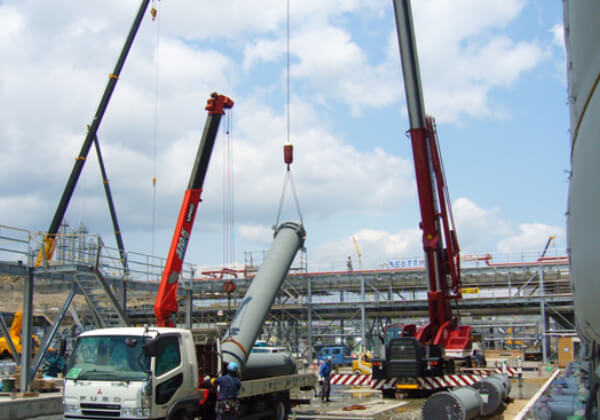
安全を第一に、管理技術者が責任を持って施工、工程、品質の管理を行いながら協力会社と連携し進めていきます。
土木?建築、機器据付、配管、電気?計装、断熱などの工事があります。 -
 FORE:Napoleon marched triumphantly forwards towards Berlin. In Leipzic he confiscated British merchandise to the value of about three millions sterling. He entered Berlin on the 27th of October. As he traversed the field of Rossbach, where Frederick the Great had annihilated a French army, he ordered his soldiers to destroy the small column that commemorated that event. He took up his residence in the palace of the King of Prussia at Berlin. The wounded and blind Duke of Brunswick entreated of the conqueror that his hereditary State of Brunswick might be left him, but Buonaparte refused in harsh and insulting terms. Moreover, he ordered his troops to march on that territory and town, and the dying duke was compelled to be carried away on a litter by men hired for the purpose, for all his officers and domestics had deserted him. Buonaparte had a particular pleasure in persecuting this unhappy man, because he was brother-in-law to George III. and father-in-law to the heir to the British Crown; but he also wanted his dukedom to add to the kingdom of Westphalia, which he was planning for his brother Jerome. The duke's son requested of Buonaparte leave to lay his body in the tomb of his ancestors, but the ruthless tyrant refused this petition with the same savage bluntness, and the young duke vowed eternal vengeance, and, if he did not quite live to discharge his oath, his black Brunswickers did it at Waterloo.The effects of the monstrous drain of the war on the revenues of the country were now beginning to show themselves in the manufacturing districts, and the workpeople had broken out in serious riots in Lancashire, Yorkshire, and Cheshire. Instead of attributing their distresses to the vast system of taxation, they attributed them to the increase of machinery, and broke into the mills in many places and destroyed it. This was only adding to the misery by destroying capital, and stopping the very machinery which gave them bread. A committee of inquiry was instituted, and the result showed that the members of Parliament were not a whit more enlightened than the artisans themselves. Instead of attempting to find some means of ameliorating the condition of the starving population¡ªwhich, indeed, they could not do, for nothing but peace and reduction of taxation, and the restoration of the natural conditions of commerce could do it,¡ªthey recommended coercion, and Lord Castlereagh brought in a severe Bill for the purpose,¡ªthe first of many such Bills of his, which nearly drove the people eventually to revolution, and, by a more fortunate turn, precipitated reform of Parliament. This Bill, the operation of which was limited to the following March, was carried by large majorities, and Parliament, thinking it had done enough to quiet hungry stomachs in the north, was prorogued on the 30th of July, and on the 20th of September dissolved.
プラント完成後、性能が出るか試運転を行って確認、調整を行います。
きめ細やかな運転指導により実運転へのスムースな移行を促します。完成図書と共にお引渡しとなります。
運転?保守フェーズ
-
 FORE:Before the termination of the reign there were active preparations for putting steam-engines on all iron railroads. So early as 1758, Watt, who afterwards did so much in the construction of steam-engines, had an idea that locomotive engines might be put on such roads. In 1770 such an engine was actually made and worked by John Theophilus Cugnot, in Paris, but he had not discovered sufficient means of controlling it. In 1802 Messrs. Trevethick and Vivian exhibited such an engine running along the streets in London. In 1805 the same gentlemen again exhibited one of their engines working on a tram-road at Merthyr Tydvil, drawing ten tons of iron at the rate of five miles an hour; and in 1811 Mr. Blenkinsop was running an engine on the Middleton Colliery, near Leeds, drawing a hundred tons on a dead level at the rate of three and a half miles an hour, and going at the rate of ten miles when only lightly loaded. Blenkinsop had made the wheels of his engines to act by cogs on indented rails; for there was a strong persuasion at that period that the friction of plain wheels on plain rails would not be sufficient to enable the engine to progress with its load. The folly of this idea had already been shown on all the colliery lines in the kingdom, and by the engine of Trevethick and Vivian at Merthyr. The fallacy, however, long prevailed. But during this time Thomas Gray was labouring to convince the public of the immense advantages to be derived from steam trains on railways. In five editions of his work, and by numerous memorials to Ministers, Parliament, lord mayors, etc., he showed that railroads must supersede coaches for passengers, and waggons and canals for goods. He was the first projector of a general system of railroads, laid down maps for comprehensive general lines for both England and Ireland, invented turn-tables, and very accurately calculated the cost of constructing lines. For these services he was termed a madman, and the Edinburgh Review recommended that he should be secured in a strait jacket. In his "Life of George Stephenson" Dr. Smiles takes exception to the statement that Thomas Gray was the originator of railways, and transfers that term to Stephenson. Let us be correct; Gray was the projector, Stephenson the constructor of railways. But it is not to be supposed that Gray had sold five editions of his work without Stephenson, and perhaps every engineer, having read and profited by it. Yet, so little had Stephenson any idea of the real scope and capacity of railways, that it was not till five years after the running of his engines on such lines, by Dr. Smiles's own showing, that he ever imagined such a thing as their becoming the general medium of human transit. He tells us Mr. Edward Pease suggested to him to put an old long coach on the Darlington and Stockton line, attached to the luggage trucks, and see if people might not wish to travel by it. Gray had demonstrated all this long before. He stood in the place of the architect, Stephenson only of the builder who carries out the architect's design. Seven years only after the death of George III. the railway line between Manchester and Liverpool was commenced, and from its successful opening, on the 15th of September, 1830, dates the amazing development of the present railway system.
プラント、機器の安全と安定稼働のために、定期的なメンテナンスをお薦めいたします。
-
 FORE:St. Clair had marched with such celerity that he reached, before the next night, Castleton, thirty miles from Ticonderoga. But the rear division under Colonel Warner halted at Hubberton, six miles short of Castleton. Early next morning, General Fraser found them on a hill. No sooner did they descry him, than one of the regiments turned and fled, leaving most of their officers to be taken prisoners. But the other two regiments, commanded by Warner and Francis, stood their ground stoutly. Fraser had with him only about eight hundred men, and the Americans were from one thousand two hundred to one thousand five hundred strong. But Fraser advanced up the hill and attacked them briskly. The Americans were protected by a sort of breastwork formed of logs and trees, and they gave Fraser a smart reception. But, calculating on the approach of Reisedel and the Germans, he fought on; and Reisedel soon after marching up with a full band of music, the Americans imagined that the whole body of the Germans was there, and fled on to Castleton as fast as they could.Another council was immediately summoned to determine on the choice of a new Empress. All had been arranged before between the House of Austria and Napoleon, and the cue was given to the council to suggest accordingly. Eugene Beauharnais was again strangely appointed to propose to Prince Schwarzenberg for the hand of the archduchess, and, having his instructions, his proposal was accepted, and the whole of this formality was concluded in four-and-twenty hours. Josephine set out for her new estate in Navarre, and Marshal Berthier was appointed to act as proxy for his master in the espousals of the bride at Vienna. There were difficulties in the case which, strictly Catholic as the Hapsburg family is, it is surprising that they could be so easily got over, and which show how much that Imperial family was under the control of "the Upstart," as they familiarly styled him amongst themselves. The Pope had been too grievously insulted and persecuted by Buonaparte for it to be possible for him to pronounce the former marriage invalid; had it not been also contrary to the canons of the Church to abrogate marriage, which it regards as an entirely sacred and indissoluble ceremony. To remove this difficulty, it was stated to the Austrian family that Buonaparte's marriage with Josephine had been merely a revolutionary marriage before a magistrate, and therefore no marriage at all¡ªthe fact being originally true, but it had ceased to be so some days previous to Buonaparte's coronation, when, to remove the Pope's objection, they had been privately married by Buonaparte's uncle, Cardinal Fesch. The wedding took place at Vienna, on the 11th of March, 1810, and a few days afterwards the young Empress set out for France, accompanied by the Queen of Naples. Buonaparte, who maintained the strictest etiquette at his Court, had had all the ceremonies which were to attend his marriage in Paris arranged with the most minute exactness. He then set out himself to meet his Austrian bride, very much in the manner that he had gone to meet the Pope. Near Soissons¡ªriding alone, and in an ordinary dress¡ªBuonaparte met the carriage of his new wife, got in, and went on with her to Soissons and thence to the old chateau of Compi¨¨gne.
生産量を減らすことなく、生産能力を増強するなど、お客様のご要望にお応えできるソリューションをご提案いたします。
お客様のプロセスノウハウと当社の固有技術の融合によって最適化、効率化、さらには環境に優しい設備を実現をいたします。海外現地法人(タイ、ベトナム)におきましても同等のエンジニアリングが提供できるように、本社の技術者と連携し管理いたしております。

※これ以外にも様々な単位操作装置、単体機器製作ができます。
| 業種?分野 | プラント?設備名称 | 構成プロセス | 付帯設備?工事施工 |
|---|---|---|---|
| ファインケミカル | IT関連化学品プラント | 反応プロセス ろ過分離プロセス 乾燥プロセス |
クリーンルーム、充填、タンクヤード、 ユーティリティ、消火?防火設備、 土木?建築、計器?計装工事、 電気工事 |
| 食品工業 | 澱粉工場 | 反応プロセス 分離プロセス 精製プロセス 脱水?乾燥プロセス |
タンクヤード、ユーティリティ、 消火?防火設備、土木?建築、 計器?計装工事、電気工事、 原料受入?貯蔵設備、計量?包装設備 |
| 化学工業 | 合成樹脂工場 > | 反応プロセス 蒸留プロセス 濾過分離プロセス 乾燥プロセス |
タンクヤード、ユーティリティ、 供給設備、充填、自動倉庫、 焼却設備、出荷設備 |
| 食品工業 | 糖化工場 > (異性化糖類製造設備) |
液化?糖化プロセス 濃縮プロセス 濾過?精製プロセス |
タンクヤード、ユーティリティ、 土木?建築、計器?計装工事、 電気工事 |
| 環境?リサイクル | 溶剤回収プラント | 濃縮?調整プロセス 蒸留プロセス |
タンクヤード、計量設備、 ユーティリティ、消火?防火設備、 計器?計装工事、電気工事、 原料受入?貯蔵?出荷設備 |
| 無機化学工業 | 触媒製造プラント (自動車用) |
調合プロセス コーティングプロセス 焼成プロセス |
ロボット搬送システム、 原料調整?供給装置 |
| 無機化学工業 | 二次電池用原料 精製プラント |
調整プロセス 反応プロセス 分離?濃縮プロセス 蒸留プロセス |
タンクヤード、ユーティリティ、 土木?建築、空調設備、集塵?局所排気、 計器?計装工事、 電気工事、貯蔵設備、計量?包装設備 |
| 新エネルギー | バイオエタノール 大型実証モデルプラント > |
蒸留プロセス 脱水プロセス |
計器?計装工事、電気工事 |
| 無機化学工業 | 水素回収設備 | 水素回収プロセス | タンクヤード、冷却システム、 計器?計装工事 |